Handcrafted in Canada
Python Leather Bracelets
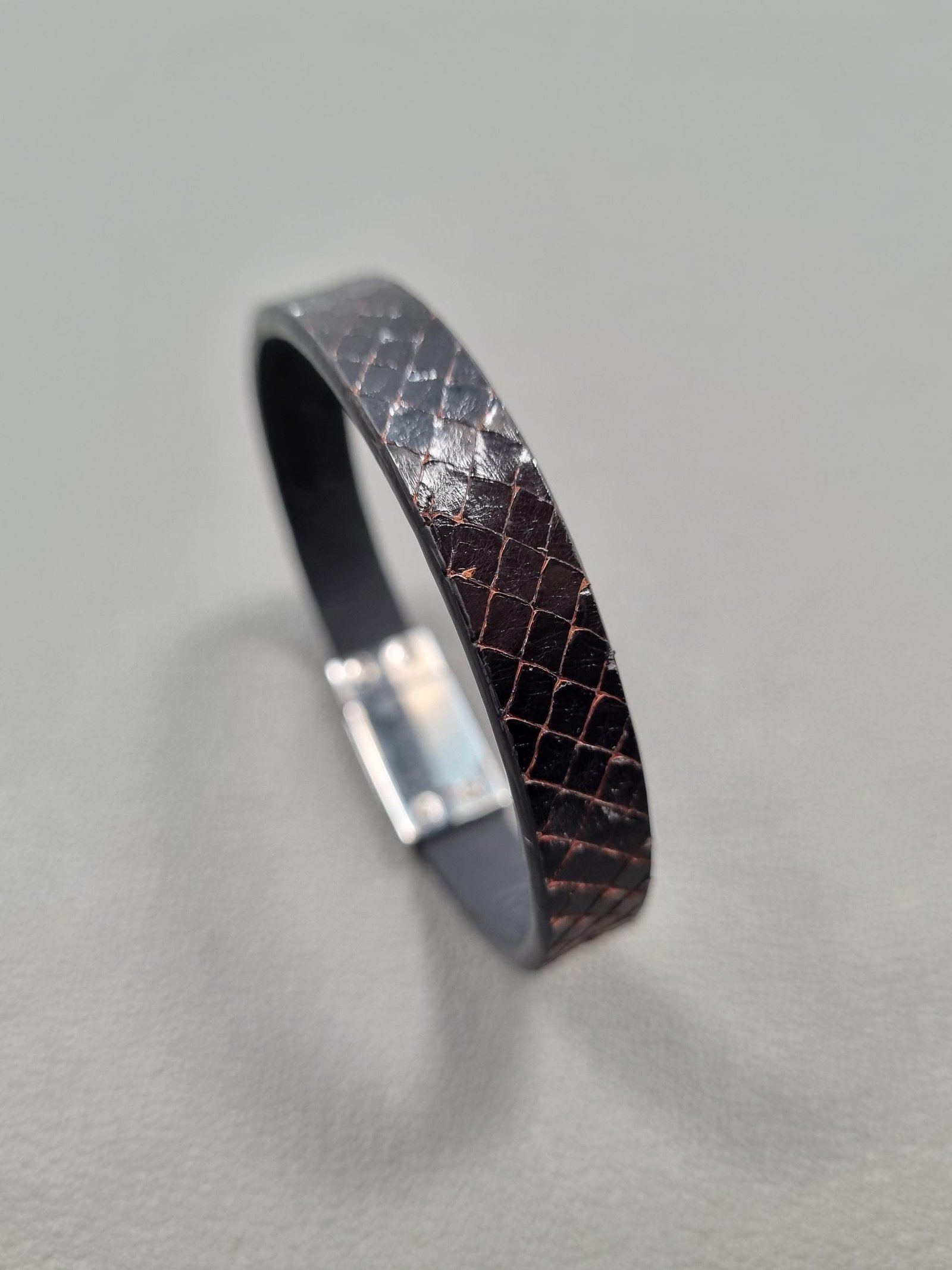
Every python piece we sell right now is built from what we call our tarnished finish, and it is worth explaining what that word is doing. Reticulated python has a natural scale pattern unlike anything else we work with — small, irregular, diamond-shaped scales rather than the ordered plates of crocodile — and rather than dye it to a flat, uniform colour the way a lot of python leather on the market is finished, we let a smoky, oxidised tone sit unevenly across the hide, so the scale edges catch a slightly darker cast than the centres. The result looks aged on day one, which is the point: it is the finish that reads as genuinely exotic rather than as a printed imitation, and no two bracelets tarnish identically because no two hides oxidise identically.
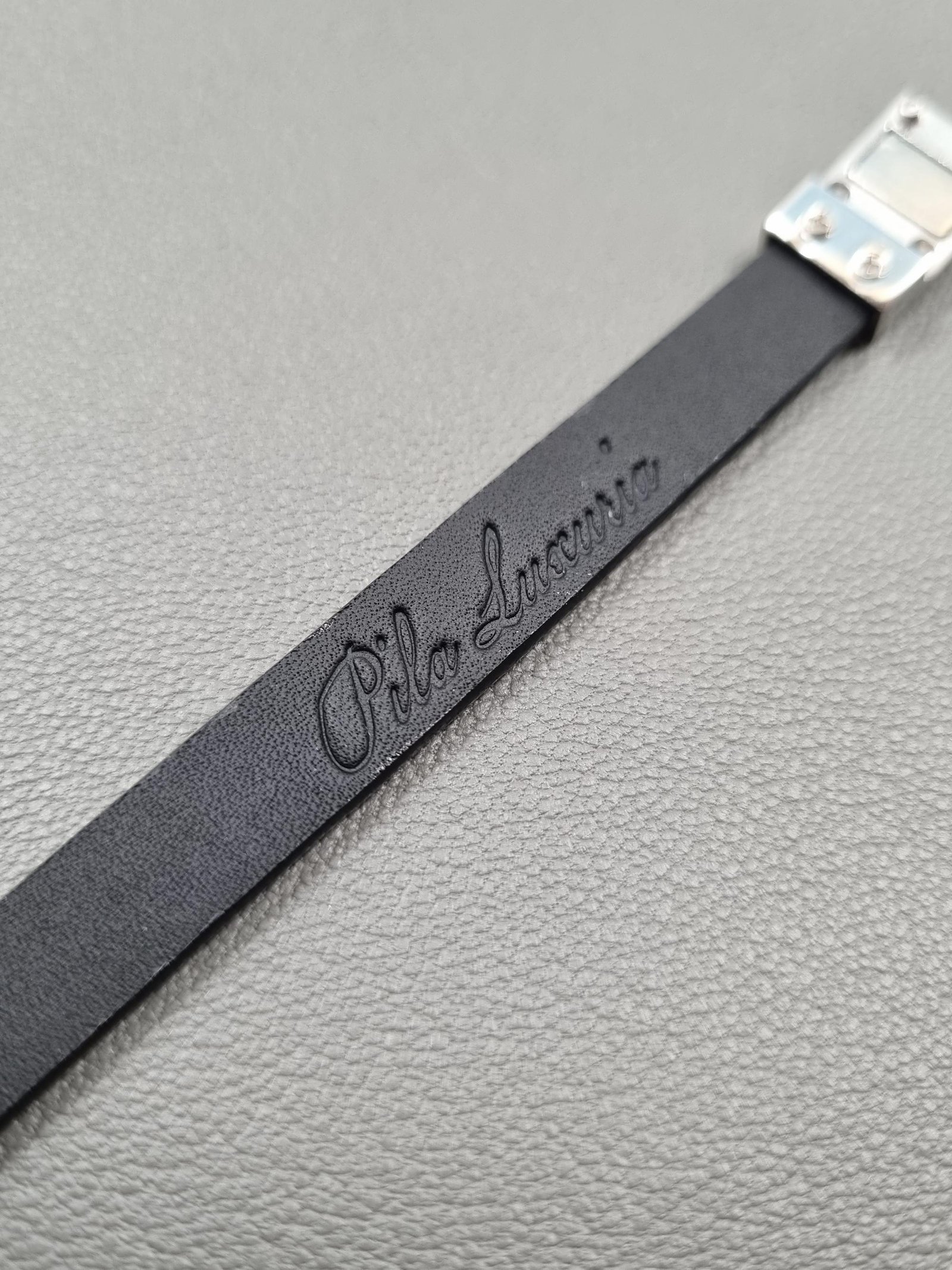
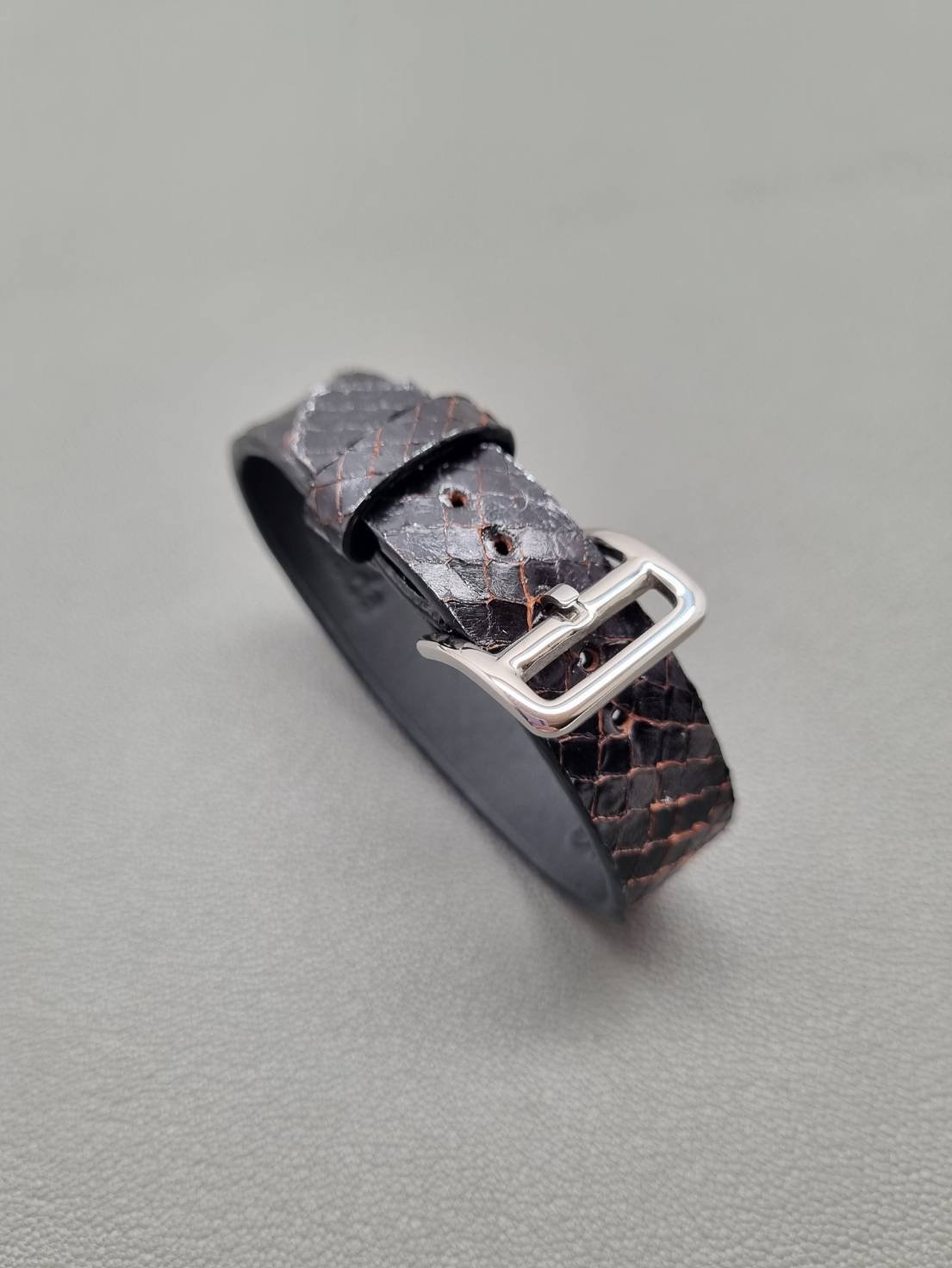
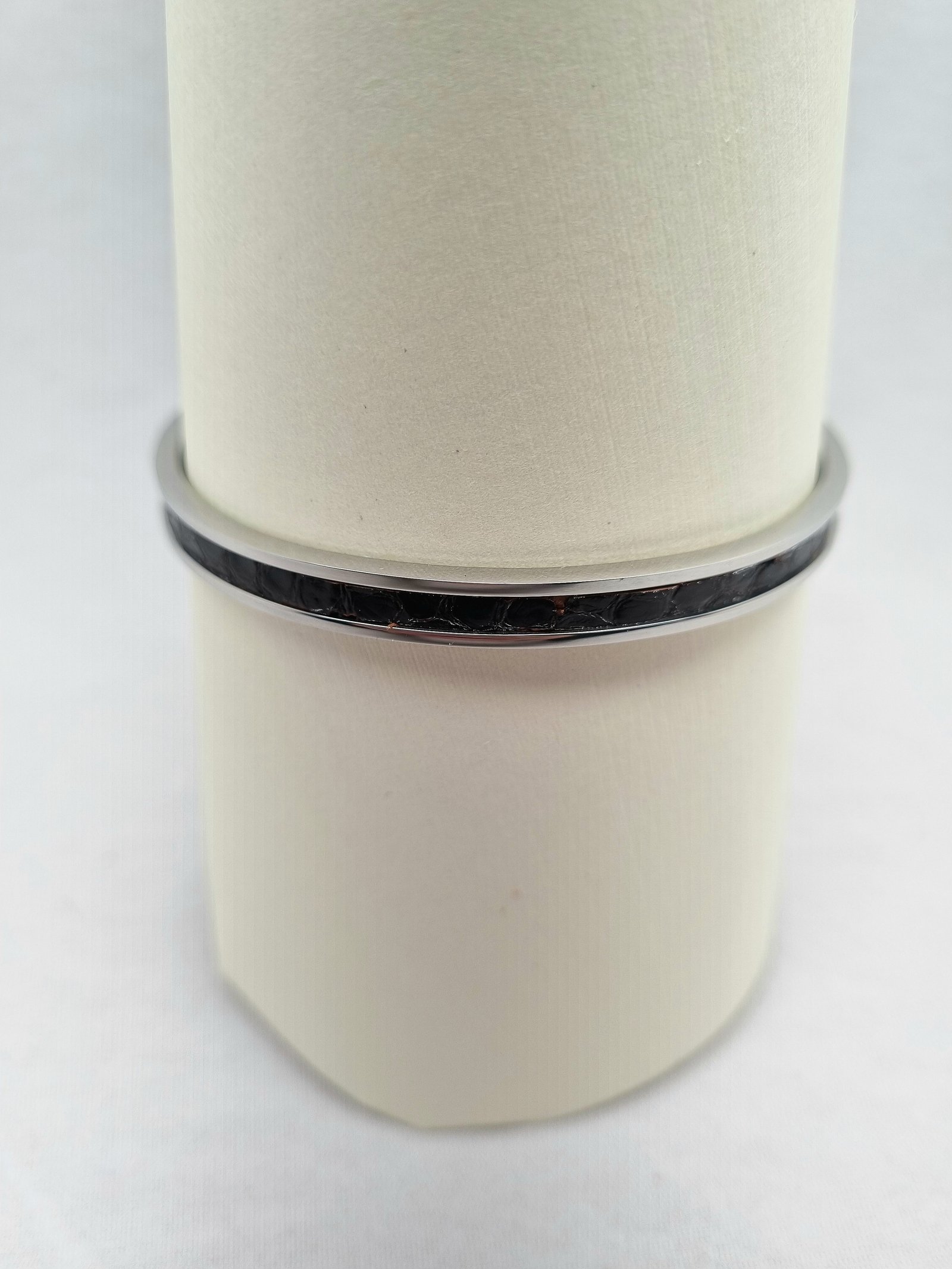
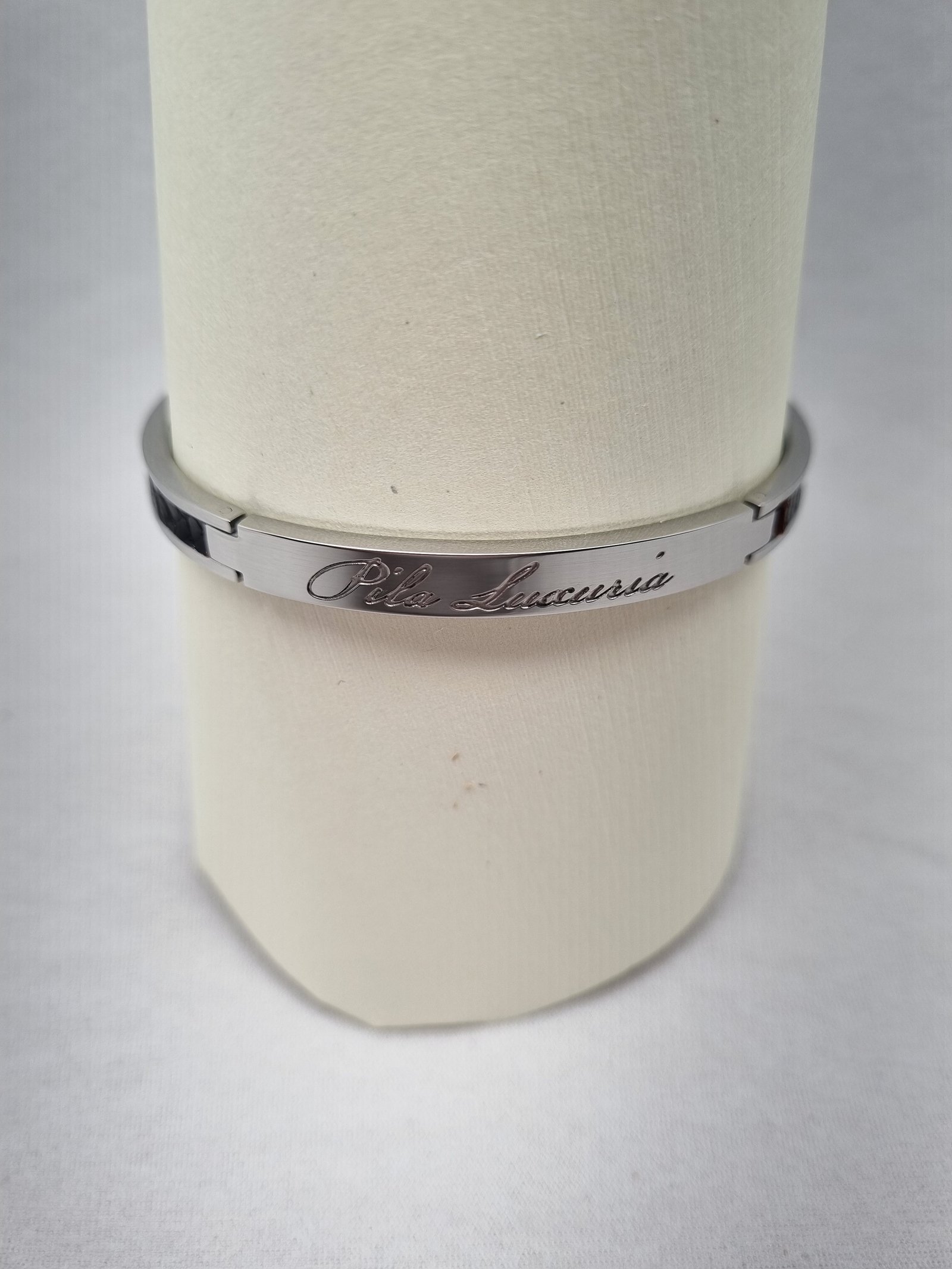
We cut it into three builds, more than any other leather here. The magnet bracelet is a full-width python band with a concealed clasp, which shows the most scale surface and is the one to choose if the pattern itself is what you are buying. The buckle bracelet closes with a traditional pin buckle rather than a magnet, giving a genuinely adjustable fit across a wider range than either the magnet or clasp builds allow — useful if you are buying for a wrist size you are not certain of. The clasp bracelet mounts a narrower python panel on a stainless steel bangle, the most restrained way to wear the scale pattern.
Python is more delicate than crocodile in one specific way worth knowing before you buy it: the scales are thinner and the hide itself is more prone to drying out and becoming brittle at the edges if it is neglected, since reticulated python has less natural oil content than crocodile skin does. Condition it two to three times a year with a cream made for exotic skins — more important here than on any other bracelet we sell — and keep it away from prolonged dry heat (a car dashboard in summer is the usual culprit) as much as from water. Worn regularly against skin, the tarnished finish continues to develop rather than fade, picking up a deeper patina at the wrist crease that most people who own one come to prefer to the bracelet as it arrived.
Because the tarnished finish is applied by hand to each hide rather than run as a flat dye batch, a commission is less about choosing a colour we do not stock and more about choosing how heavy or light you want the oxidised effect — a subtler tarnish for daily wear against other jewellery, or a heavier one if the bracelet is meant to stand alone. That conversation happens before we select a hide, and typically adds two to three weeks over the ready-made pieces shown here, most of it the finishing process itself rather than sourcing.